Documents Required for Railway Tender Participation in India
Railway tenders are among the largest government procurement opportunities available in India. Every year, Indian Railways invites thousands of tenders for civil works, electrical works, mechanical works, supply of materials, IT services, housekeeping, transportation, and many other categories.
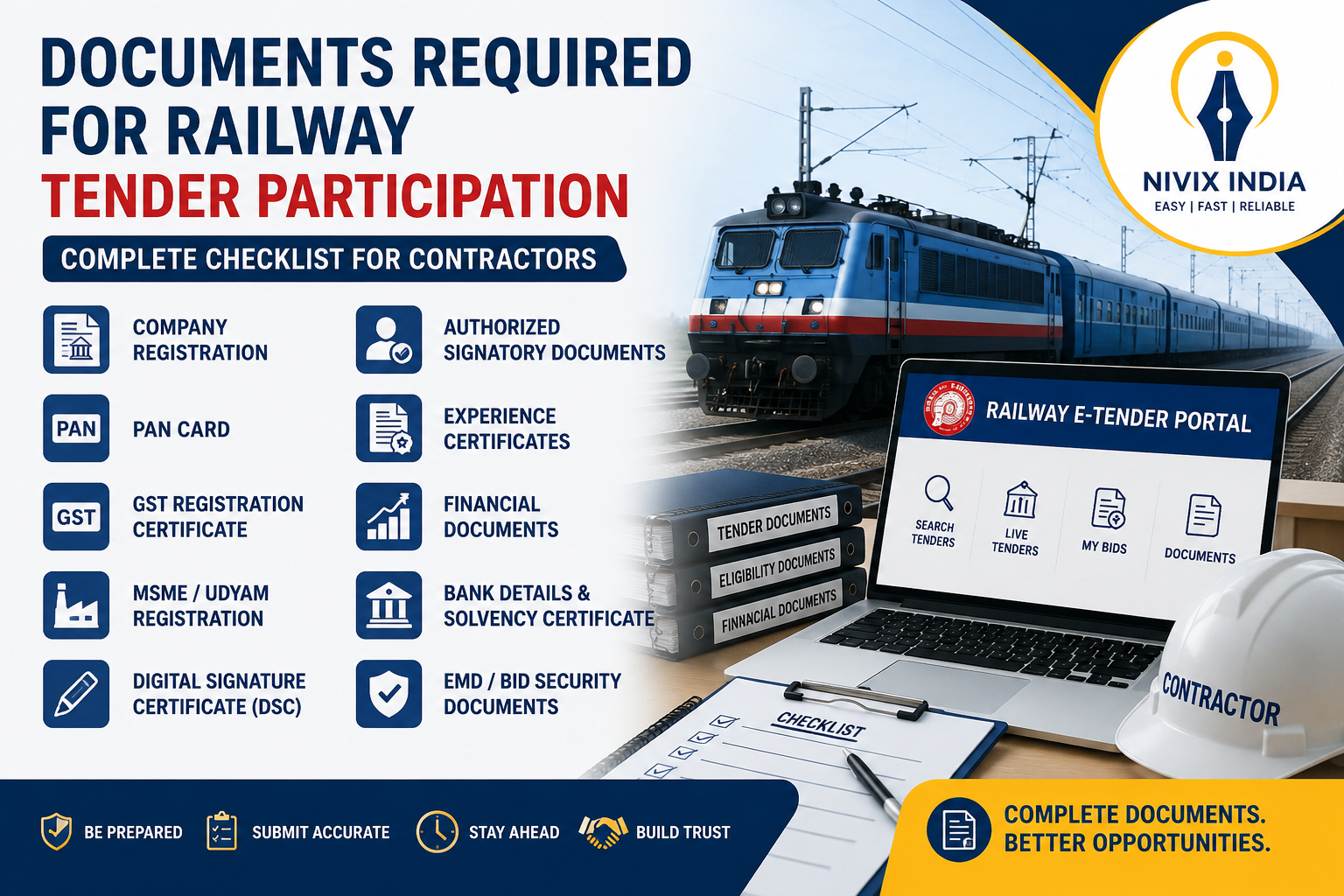
1. Company Registration Documents
2. PAN Card
3. GST Registration Certificate
4. MSME/Udyam Registration (If Applicable)
5. Digital Signature Certificate (DSC)
6. Authorized Signatory Documents
7. Experience Certificates
8. Financial Documents
9.Income Tax Documents
10. Bank Details
11. EMD/Bid Security Documents
12. Technical Documents
13. Labour and Statutory Compliance Documents
14. Affidavits and Declarations
15. Tender-Specific Documents
Frequently Asked Questions (FAQs)
1. Is GST registration mandatory for Railway Tender Participation?
Many Railway tenders require GST registration, but the exact requirement depends on the tender conditions.
2. Can an MSME participate in Railway tenders?
Yes. Eligible MSMEs can participate, subject to the terms and conditions specified in the tender document.
3. Is a Digital Signature Certificate necessary?
Yes. Online Railway tender submission generally requires a valid Class-3 Digital Signature Certificate.
4. Are experience certificates mandatory?
Many tenders specify minimum experience requirements. Always check the eligibility section of the tender.
5. Can documents vary from one Railway tender to another?
Yes. While many documents are commonly required, each tender may have additional projectspecific requirements.
Conclusion
Railway Tender Participation requires careful preparation and complete documentation. Organizing your legal, financial, technical, and compliance documents before bidding helps improve accuracy and reduces the chances of rejection due to documentation errors.
Since document requirements may vary depending on the nature and value of the work, bidders should always read the tender notice and eligibility criteria carefully before submitting their bids.
Tender
Documents Required for Railway Tender Participation in India
Participating in Railway tenders can open significant business opportunities for contractors, suppliers, manufacturers, and service providers. However, before submitting a bid, it is important to ensure that all required documents are complete and up to date. This guide explains the essential documents required for Railway Tender Participation in India.
