Common Mistakes to Avoid》
■Not reading the tender document carefully, resulting in missed eligibility criteria or submission requirements.
■Submitting incomplete documents, such as missing certificates, declarations, or financial statements.
■Including pricing information in the technical bid, which can lead to immediate disqualification in a two-bid tender system.
■Submitting an incorrect or invalid Earnest Money Deposit (EMD), including the wrong payment method or an expired bank guarantee.
■Ignoring corrigendums or amendments issued after the tender is published.
■Failing to meet the required technical specifications or mandatory standards.
■Failing to meet the required technical specifications or mandatory standards.
■Using generic bid content instead of preparing a proposal tailored to the tender requirements.
■Making errors in the financial bid, such as incorrect calculations, pricing, or tax details.
■Uploading expired, incorrect, or unclear documents, or using the wrong file format.
■Missing required signatures, stamps, or a valid Digital Signature Certificate (DSC).
■Submitting the bid at the last minute, increasing the risk of portal errors, upload failures, or missed deadlines.
■Providing inaccurate or misleading information, which may result in bid rejection or blacklisting.
Why Avoiding These Mistakes Matters
Improves compliance with tender requirements.
Reduces the risk of bid rejection.
Increases technical evaluation scores.
Builds credibility with government departments.
Improves the chances of winning government contracts.
FAQs
1. What is the main reason for tender rejection?
Incomplete documents and non-compliance with tender requirements.
2. Can price details be included in the technical bid?
No. It may lead to immediate disqualification.
3. Why should corrigendums be checked?
They contain important updates to the tender.
4. When should a tender be submitted?
Preferably at least 48 hours before the deadline.
5. How can businesses improve their success rate?
Follow the tender guidelines, submit complete documents, and avoid errors.
Tender Bidding
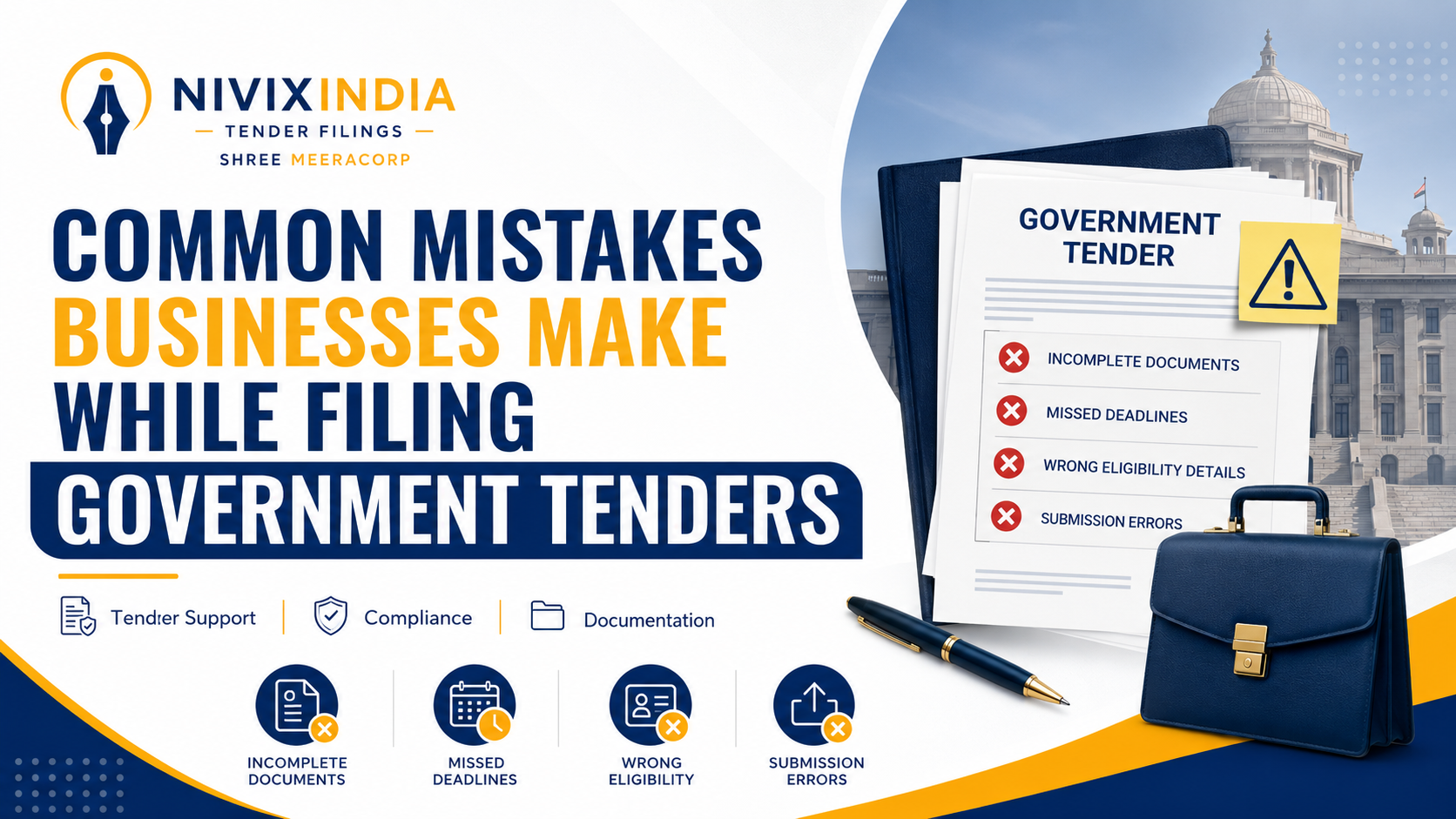
Common Mistakes Businesses Make While Filing Government Tenders .
Many businesses lose government tenders due to documentation, compliance, and procedural errors rather than high pricing. Even a minor mistake can lead to automatic bid rejection before the proposal is evaluated
