What is the ITR Filing Due Date?
The ITR filing due date is the last date prescribed by the Income Tax Department for submitting an Income Tax Return for a particular financial year and assessment year. Filing ITR before the due date helps taxpayers avoid late fees, interest, compliance issues and unnecessary delays in refund processing.
For every taxpayer, it is important to check the correct due date based on income type, business status, audit requirement and applicable tax rules.
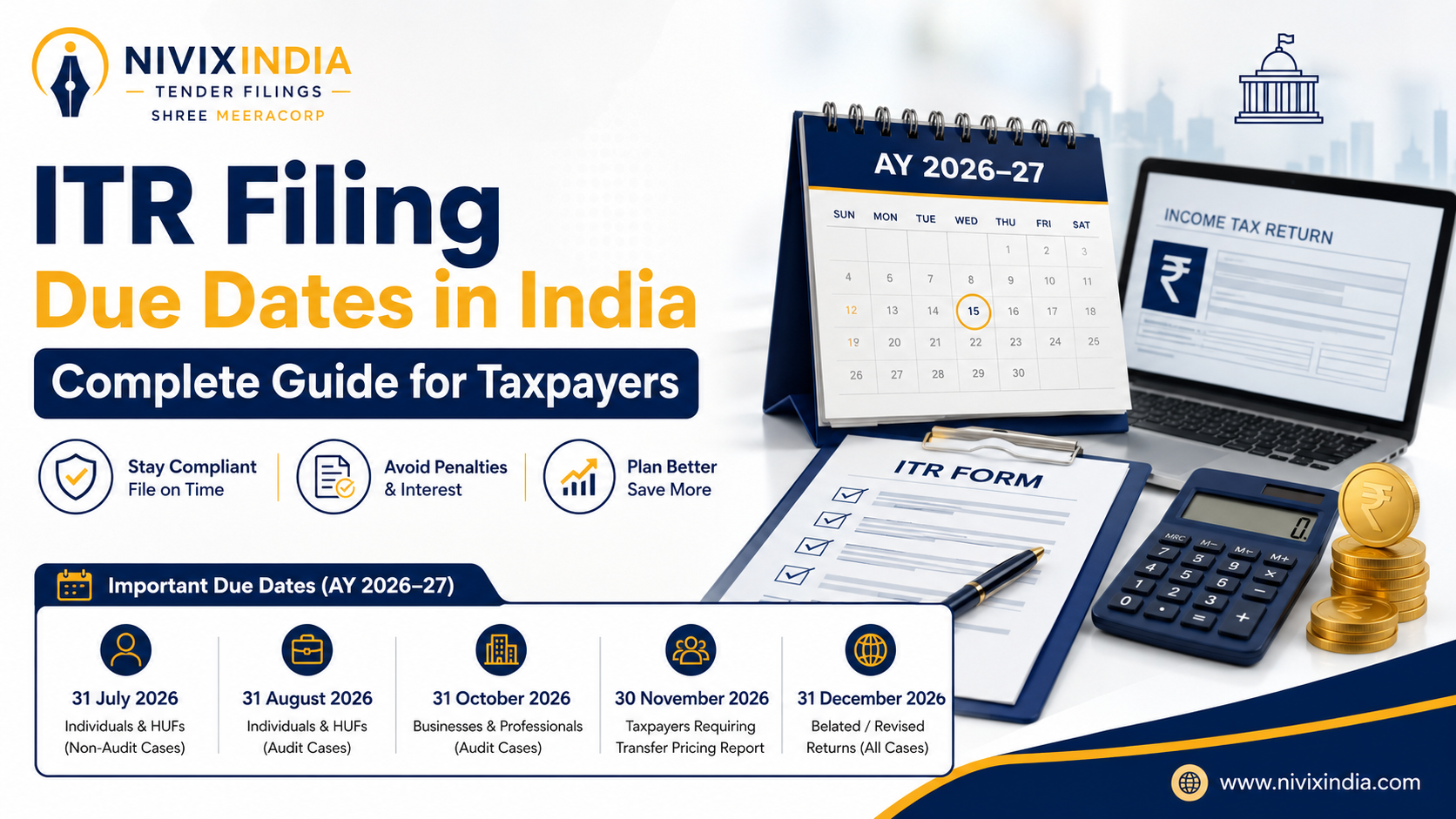
ITR Filing Due Dates for AY 2026–27
The following due dates are commonly applicable for ITR filing in India for AY 2026–27, unless extended by the government through an official notification.
31 July 2026
This due date is generally applicable for:
Salaried individuals
Pensioners
Individuals and HUFs not requiring audit
Taxpayers filing ITR-1 or ITR-2, where applicable
Certain non-audit taxpayers
31 October 2026
This due date is generally applicable for:
Businesses and professionals whose accounts are required to be audited
Companies
Taxpayers covered under tax audit provisions
Taxpayers filing applicable business ITR forms in audit cases
30 November 2026
This due date is generally applicable for:
Taxpayers required to furnish a transfer pricing report
Businesses having specified international transactions or domestic transactions
Cases where transfer pricing compliance is applicable
31 December 2026
This date is generally relevant for:
Belated return filing
Revised return filing
Taxpayers who missed the original ITR filing due date
A belated or revised return may be filed within the prescribed time limit, subject to applicable late fees, interest and other tax provisions.
Penalties and Consequences of Missing the ITR Due Date
If a taxpayer misses the original ITR filing due date, they may still be able to file a belated return, but the following consequences may apply:
Late Filing Fee Under Section 234F
₹5,000 if total income exceeds ₹5 lakh
₹1,000 if total income is ₹5 lakh or less
No late fee if total income is below the basic exemption limit
Other Possible Consequences
Missing the ITR due date may also lead to:
Interest on unpaid tax
Delay in refund processing
Restriction on carrying forward certain losses
Compliance issues in financial records
Difficulty in loan, visa or financial documentation
Documents Required Before Filing ITR
Before filing an Income Tax Return, taxpayers should keep the following documents ready:
PAN Card
Aadhaar Card
Form 16 for salaried employees
Form 26AS
Annual Information Statement
Taxpayer Information Summary
Bank account details
Salary slips, if required
Investment and deduction proofs
Interest certificates from banks
Home loan interest certificate, if applicable
Capital gains statements, if applicable
Business income records, if applicable
TDS/TCS certificates, if applicable
These documents help taxpayers file an accurate return and reduce the chances of mismatch or notice.
Why Timely ITR Filing is Important
Timely ITR filing is important because it helps taxpayers stay compliant and maintain proper financial records.
Key benefits include:
Avoiding late filing fees
Faster refund processing
Smooth loan and visa documentation
Better financial credibility
Carry forward of eligible losses
Reduced risk of compliance issues
Common Mistakes to Avoid While Filing ITR
Taxpayers should avoid the following common mistakes:
Selecting the wrong ITR form
Not matching Form 26AS, AIS and TIS
Missing bank interest income
Not reporting capital gains correctly
Claiming wrong deductions
Entering incorrect bank account details
Filing after the due date
Not verifying the ITR after submission
How Nivix India Can Help
Nivix India provides professional documentation, compliance and filing support for individuals, professionals and businesses. Our team can help taxpayers understand required documents, avoid common filing mistakes and complete the ITR filing process in a structured way.
For professional tax filing and compliance support, contact Nivix India today.
FAQs
1. What is the last date to file ITR for salaried individuals for AY 2026–27?
For salaried individuals and other non-audit taxpayers, the due date is generally 31 July 2026, unless extended by the government.
2. Can I file ITR after the due date?
Yes, taxpayers may file a belated return within the prescribed time limit, but late fees, interest and other consequences may apply.
3. What happens if I miss the ITR filing due date?
If you miss the due date, you may have to pay late filing fees, interest on unpaid tax and may lose the ability to carry forward certain losses.
4. What documents are required for ITR filing?
Common documents include PAN, Aadhaar, Form 16, Form 26AS, AIS, TIS, bank details, investment proofs, interest certificates and capital gains statements.
5. Is ITR filing required if tax is already deducted?
Yes, if your income is taxable or return filing is applicable to you, ITR filing may still be required even if TDS has already been deducted.
Conclusion
ITR filing due dates are important for every taxpayer in India. Filing your return on time helps avoid penalties, interest and compliance issues. Taxpayers should keep all required documents ready, verify income details carefully and file the correct ITR form before the applicable deadline.
For professional ITR filing, documentation and compliance assistance, contact Nivix India today.
Disclaimer
This blog is for general informational purposes only. Income Tax rules, forms and due dates may change as per official government notifications. Taxpayers should verify the latest updates from the official Income Tax Department portal or consult a qualified tax professional before filing.
ITR Filing
ITR Filing Due Dates in India: Complete Guide for Taxpayers
Filing your Income Tax Return (ITR) on time helps you stay compliant with tax laws, avoid penalties, and receive refunds without delay. The due date varies depending on the taxpayer's category and audit requirements.
